


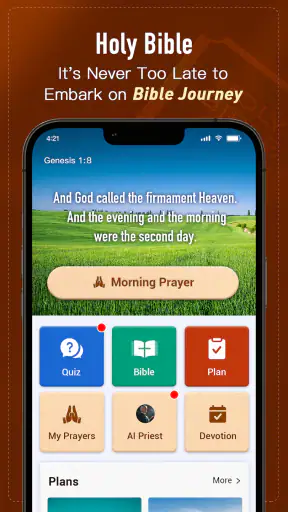

I installed Holy Bible, KJV Bible + Audio expecting a straightforward King James Bible reader, but the app is built around a wider routine: reading Scripture offline, listening to passages, answering Bible quizzes, exploring guided prayers, and following plans. That combination gives it strong first-week appeal, especially if you want one place for several forms of Bible engagement instead of moving between a reader, an audio app, and a separate devotional tool.
After spending time with it, my opinion is positive but not uncritical. The app is easy to understand, free to start, and suitable for everyone, yet its lasting value depends on whether you actually use the extra tools after the initial curiosity wears off. The KJV text is the foundation, while the AI Priest, quizzes, prayers, and plans are the features that try to turn reading into a repeatable habit. Some people will find that helpful; others will prefer a quieter Bible app with fewer prompts.
What the first week feels like
The first thing I appreciated was the offline focus. A Bible reader becomes much more useful when I can open it during a commute, while travelling, or in a place with unreliable reception. I do not have to treat a reading session as something that depends on a strong connection. That makes the app practical rather than merely decorative, particularly for anyone who wants Scripture available during short gaps in the day.
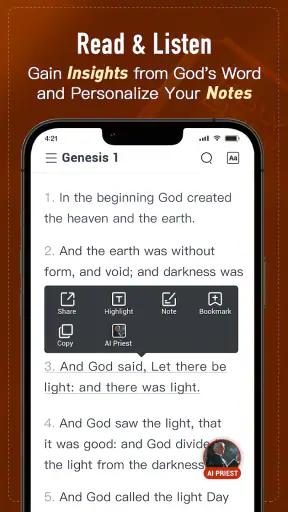
The King James Version gives the experience a distinct character. Its language can feel solemn and familiar, especially for readers who already use the KJV in church or personal study. It can also feel demanding if you are new to older English. I would not choose this app expecting a modern-language paraphrase. The wording is part of the appeal, but it also means that some passages require slower reading and occasional reflection before their meaning becomes clear.
Audio changes the rhythm considerably. Instead of looking at the screen, I can listen while doing a simple household task or taking a walk. That is useful when I want exposure to a longer passage but do not have the attention or free hands for reading. Still, audio is not automatically better than text. For detailed study, I prefer seeing the verse, pausing, and returning to a line. The listening option works best as a second mode rather than a complete replacement for reading.
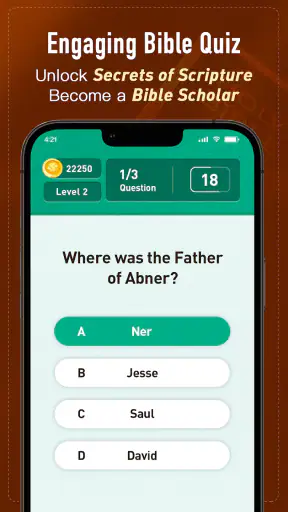
The quiz feature is one of the more effective ways to make the first week feel active. A quiz gives me a reason to recall what I have just read instead of moving through chapters passively. That distinction matters: recognition is easy when a verse is in front of me, while recall shows whether I actually followed the people, events, and themes. I would use quizzes after a reading session, not as my main way to learn the Bible.
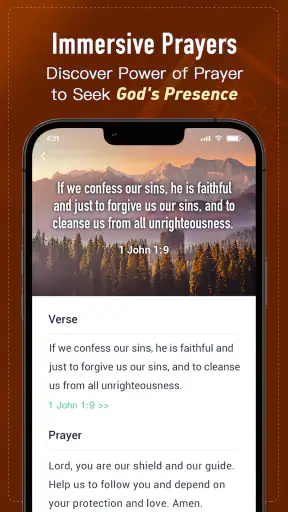
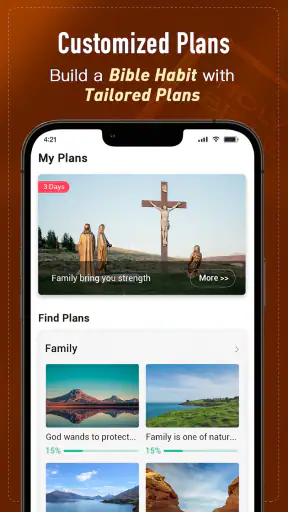
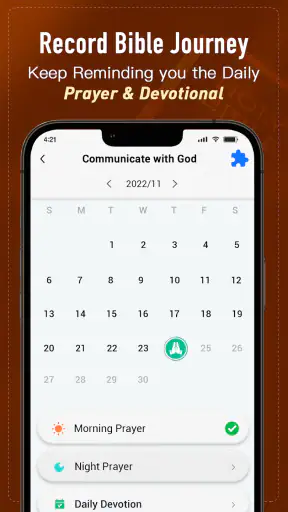
Guided prayers and plans add structure for users who do not know where to begin. A plan can remove the small but persistent problem of choosing a passage every day. The prayer material serves a similar purpose when I want a devotional moment but do not have words ready. These tools make the app more approachable for a new reader, although experienced users may find them less necessary.
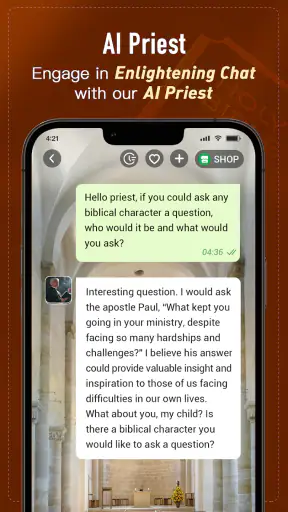
The AI Priest is the feature I approached most carefully. It can make the app feel conversational and may help someone think through a passage or find a starting point for reflection. I would treat it as a prompt for personal study, not as a substitute for a pastor, priest, trusted teacher, or serious commentary. AI-generated guidance should be checked against the biblical text and the user’s own tradition. That limitation is important because a friendly answer can sound more authoritative than it deserves.
During the first week, the app benefits from variety. I can read in the morning, listen later, try a quiz when I have a few spare minutes, and use a plan to keep the next session visible. This variety is a real strength for people whose schedules change from day to day. It also creates the first possible weakness: several tools compete for attention, and the app can become more about choosing an activity than actually spending time with the text.
The app comes from WOOMBIT and sits in the Books & Reference category rather than presenting itself as a social network or a full study suite. That positioning feels accurate. Its best quality is convenience: it brings several Bible-related activities together without making me assemble a personal collection of separate apps. The free entry point also makes it easy to test the reading experience before deciding whether the additional options matter to me.
Small workflows that make it more useful
My preferred first-week workflow is simple: I start with a short text session, switch to audio only when I have a suitable task, and finish with a quiz instead of immediately opening another feature. This keeps the tools connected to the reading. If I begin with quizzes or conversational prompts, I can easily mistake activity for understanding.
A second useful approach is to use offline reading as a deliberate backup, not just a technical convenience. Before leaving home, I open the passages I expect to read and make sure I know where the plan has placed me. That reduces the temptation to abandon the habit when a connection is poor. The app is strongest when it removes friction before the moment I need it.
I also found that audio is better suited to repetition than first exposure. On a first reading, the KJV vocabulary and sentence structure deserve visual attention. On a later pass, listening can reinforce the passage and reveal phrases I skimmed over. This makes the audio option more valuable over time than using it randomly.
Does it still earn a place after the novelty?
Month-to-month value comes from routine
The long-term case for this app is not the number of tools on its opening screen. It is whether those tools help me return consistently. A Bible plan can provide a dependable path, while offline access makes the routine resilient. If I already have a daily reading habit, the app can serve as a convenient home for it. If I do not, the plan and prayer features may lower the barrier enough to get started.
For a busy person, the combination of formats is more meaningful than it first appears. A normal day may allow five minutes of reading but no quiet time for a longer study. Another day may offer a walk suitable for audio. On a weekend, a quiz can help review a passage. The app accommodates those changes without requiring me to learn a different interface each time. That flexibility is a genuine recurring benefit.
The KJV also gives the app a clear audience. Readers who value that translation and want an offline copy will understand the purpose immediately. Someone trying to compare several translations, examine original-language notes, or use extensive cross-references may find the experience too narrow. This is not a criticism of the KJV; it is a reminder that translation preference determines whether the core library feels complete.
Compared with a paper Bible, the app is more portable and offers audio, plans, quizzes, and guided prompts. Compared with a basic Bible reader, it is more interactive. Compared with a large study Bible platform, it appears more focused on accessible reading and habit formation than on scholarly research. I would choose it over a paper copy when I need portability, but I would still keep a physical Bible or a more detailed study resource for slow, note-heavy work.
The free price makes experimentation easy, although in-app purchases range from forty-nine cents to nearly thirty dollars per item. That matters when deciding whether the app will remain a simple free reader or become a paid devotional tool. I would spend nothing until I had used the core reading, offline, audio, plan, and quiz experience long enough to know which parts I actually revisit. Paying for a feature that only feels exciting during the first week would not improve the habit.
The app has a 4.7 average from around thirty thousand ratings, with roughly one thousand two hundred written reviews, and it has passed five million installs. Those figures suggest that the concept has reached a substantial audience and that many users find it worthwhile. I would still interpret popularity carefully: a large audience cannot tell me whether the KJV style, AI guidance, or plan structure matches my own needs.
The maintenance burden is modest, but not zero
Maintaining a reading habit is easier when the app does not demand constant setup. The offline design reduces dependence on daily connectivity, and a plan can provide the next step automatically. That is the kind of quiet maintenance I want from a devotional app. I should be able to open it and begin rather than spend several minutes arranging content.
There is also a mental maintenance cost. Because the app offers reading, audio, quizzes, prayers, plans, and AI interaction, I need to decide which role it is playing today. My solution is to choose one primary routine and treat the other features as occasional support. For example, I might make a plan the backbone, use audio twice during a busy week, and reserve quizzes for review. Without that boundary, variety can turn into scattered use.
Updates can matter for an app that combines text, audio, interactive content, and AI tools. The current version is 1.23, and the minimum operating system is Android 5.0, which makes the app accessible to many older Android devices. Broad compatibility is helpful, especially for users who do not replace phones frequently. At the same time, older hardware may make a richer, multi-feature app feel less smooth than a plain text reader, so I would judge it on the specific device rather than assuming every phone will feel identical.
Privacy-minded users may also want to be deliberate about how they use conversational features. I would avoid entering personal pastoral, medical, financial, or family details into an AI conversation simply because the interface feels private. For spiritual reflection, broad questions about a passage are safer and more useful than treating the tool as a confidential counsellor. That is a sensible boundary for any AI-assisted religious app.
Where fatigue can appear
The first source of fatigue is the KJV itself for readers who are not accustomed to it. Beautiful phrasing does not always mean immediate clarity. If I am tired, I may understand less from a chapter than I would from a modern translation. This app is therefore a better fit for someone who already wants the KJV or is willing to read slowly, not for someone seeking the simplest possible English Bible.
The second is feature overload. Quizzes and plans can make reading more engaging, but not every session needs a task attached to it. Some users will want a calm page, a verse, and silence. For them, the extra guidance may feel like noise. A simpler dedicated reader could be the better choice if the goal is distraction-free reading with minimal decisions.
Audio can create a different kind of tiredness. Listening while multitasking is convenient, but it is also easy to lose the thread of a narrative or miss a difficult phrase. I would not use audio during work that requires concentration, and I would replay important sections rather than assume that hearing a chapter equals absorbing it.
The AI Priest may also lose its novelty. Conversational guidance is appealing when I have a specific question, but generic prompts can become repetitive if I use them every day. Its value depends on the quality of the question I bring to it. I would keep it as an occasional reflection aid and rely on the text, prayer, community, and established teaching for deeper formation.
Finally, plans can become discouraging if I treat missed days as failure. The best way to preserve the habit is to resume without trying to compensate for every missed session. A plan should give direction, not create guilt. If the app’s structure makes me feel that I am managing a streak instead of reading thoughtfully, I would step back and use the plain Bible view for a while.
Who should use it, and who should skip it?
I would recommend it to a KJV reader who wants offline access and appreciates having audio, guided prayers, plans, and quizzes in one app. It is especially suitable for someone building a new routine, someone whose schedule changes often, or someone who likes a little interaction after reading. The age rating of Everyone also makes its general presentation approachable for a broad audience.
I would be more cautious about recommending it to a serious Bible student who needs extensive academic tools, multiple translations, detailed original-language resources, or a robust annotation system. I would also point a reader toward a simpler alternative if they dislike AI features or prefer a completely uncluttered reading environment. The app is not a universal replacement for every kind of Bible resource.
For families or small groups, the quiz feature may offer a practical way to review a shared passage, but I would not assume that an AI response should settle a theological disagreement. The app can support discussion; it should not become the final authority in one. That distinction keeps its convenience in proportion to its actual role.
My long-term verdict
After the initial excitement fades, this app earns lasting space when I use its features as a connected routine rather than as a collection of novelties. Offline reading is the most dependable foundation. Plans provide direction, audio adds flexibility, quizzes encourage recall, and guided prayers help when I need a starting point. The AI Priest is potentially useful, but it is the feature I would keep at the greatest distance from unquestioned trust.
I like that the app can adapt to a real day: a quick reading before breakfast, audio during a walk, or a quiz when I have a spare moment. I also like that I can begin for free and decide later whether any in-app purchase has genuine recurring value. The trade-off is that the KJV can be challenging, the number of tools can distract, and deeper study may require another resource.
My final recommendation is therefore specific: choose it if you want a portable KJV Bible with several habit-building companions, and give yourself a week to test whether you return to those companions naturally. If you mostly want a silent, uncluttered text reader, or if you need scholarly comparison tools, choose something more focused instead. For the right reader, Holy Bible, KJV Bible + Audio is more than a digital copy of Scripture; it is a flexible routine builder. Its lasting value comes not from opening every feature, but from finding the small combination that helps you keep reading.


